22 May 2026
California Cardrooms Adjust to Approved Blackjack-Style Game Regulations Effective April 2026

California's Office of Administrative Law granted approval on February 6, 2026, to regulations that reshape how blackjack-style games operate inside the state's cardrooms, and these measures eliminate the traditional bust mechanic while altering dealer rotation protocols.
The rules replace games where players risk exceeding 21 points with formats that award wins based on the closest point total to a set target, and they impose tighter controls on how player-dealer positions rotate during play.
Details of the Approved Changes
Under the new framework, cardrooms must shift away from any blackjack variant that allows participants to bust by going over the target number, since winners now emerge solely through proximity scoring without that penalty option; this adjustment applies uniformly across all affected venues and requires operators to redesign table layouts and game software accordingly.
Player-dealer rotations face stricter limits as well, because the regulations specify narrower windows for position changes and demand documented adherence to prevent any single participant from holding the dealer role for extended periods, which ties directly into broader efforts to standardize game fairness across facilities.
Implementation Timeline and Deadlines
The regulations took effect on April 1, 2026, which means cardrooms began operating under the revised rules immediately after that date, while the compliance planning requirement sets a firm deadline of May 31, 2026, or June 1, 2026, when the end of the month falls on a weekend.
Each cardroom must submit a detailed plan outlining how its blackjack-style offerings will align with the no-bust format and updated rotation schedules, and state officials review these submissions to confirm that physical table modifications, staff training, and procedural updates meet the standards before full enforcement begins.
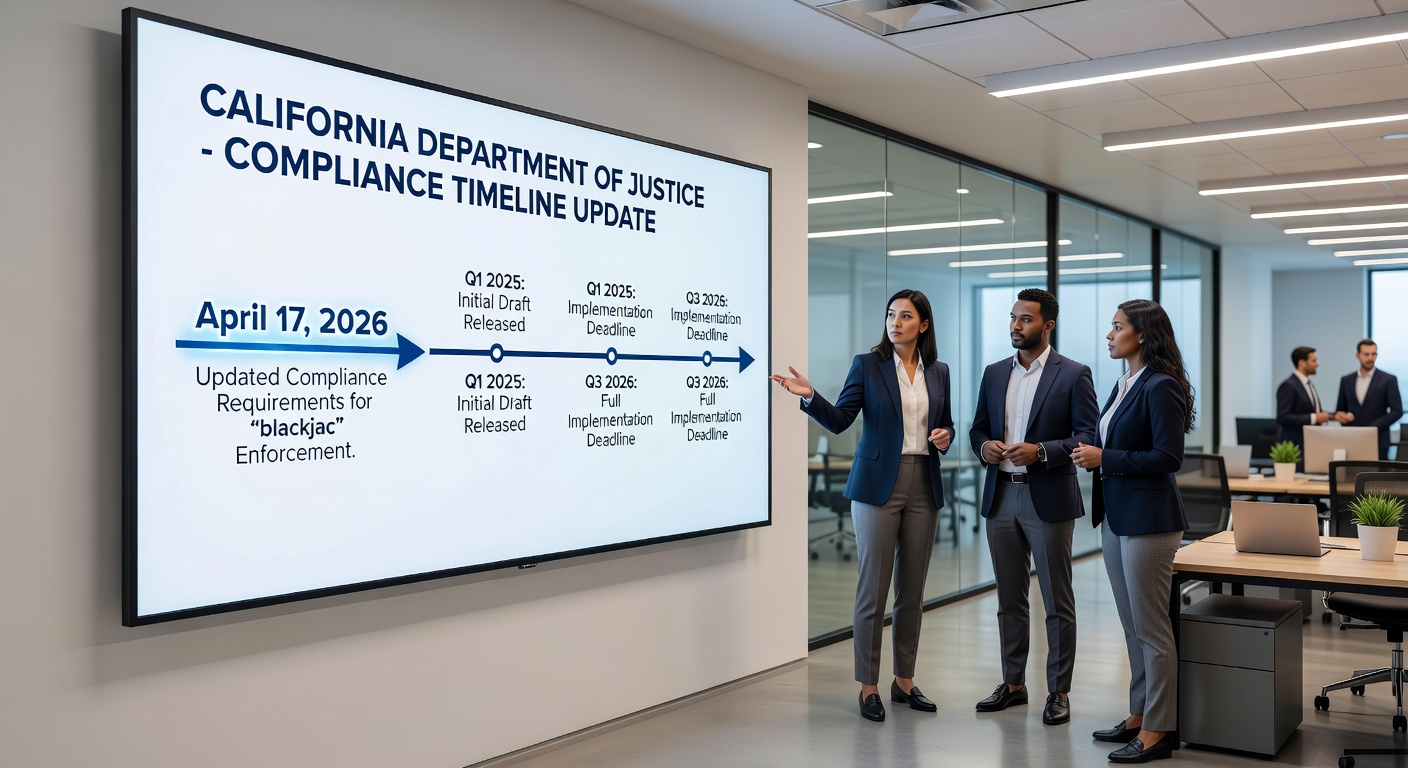
Observers note that the May 2026 window provides roughly two months after the April start date for facilities to finalize internal adjustments, which allows time for testing new game variants and verifying that dealer rotation logs satisfy the tightened criteria without disrupting ongoing operations.
Operational Adjustments Required
Cardroom staff now track every dealer rotation with greater precision because the rules reduce flexibility in how positions cycle among players, and this change forces venues to implement new logging systems that capture exact timing and participant order during each session.
Game designers at the facilities rework point-total calculations to remove any bust possibility, since the winning condition centers exclusively on closeness to the designated target, which in turn alters betting strategies and payout structures that cardrooms must recalibrate before the compliance deadline arrives.
Those who've studied the regulatory text point out that the February 6, 2026, approval followed standard review procedures, and the resulting document titled Regulations: Rotation of the Player-Dealer Position and Blackjack-Style Games supplies the precise language governing both the scoring shift and the rotation limits.
Background on Regulatory Context
Previous oversight of cardroom games allowed variations that incorporated bust mechanics similar to traditional blackjack, whereas the 2026 updates consolidate all blackjack-style offerings under a single proximity-based model that removes that element entirely, and this consolidation streamlines enforcement by creating one consistent rule set for state inspectors to apply.
Facilities that operated mixed formats before April 1, 2026, transitioned their tables during the initial weeks after the effective date, and the May 31, 2026, submission requirement ensures that each plan documents every modification from software updates to dealer training modules.
Conclusion
The sequence of approval, implementation, and compliance reporting establishes a clear pathway for California cardrooms to align with the revised blackjack-style standards, and the June 1, 2026, fallback date accommodates weekend scheduling without extending the overall timeline.
State agencies continue to monitor submissions as they arrive ahead of the May 2026 cutoff, which keeps the focus on documented adherence to both the no-bust scoring method and the refined player-dealer rotation procedures.