31 Jul 2026
Technological Advances in Live Dealer Systems Influencing Card Counting Approaches During Blackjack Tournaments

Live dealer platforms combine video streaming with automated shuffling mechanisms that transmit real-time data to remote participants, and these systems have begun to intersect with longstanding card counting practices in tournament settings where players compete for prize pools based on accumulated chip totals. Tournament organizers now integrate software that monitors deck penetration and alerts staff to unusual betting patterns, yet traditional counting methods such as the Hi-Lo system continue to find application when players adjust wagers according to the remaining high cards in the shoe.
Core Mechanics of Live Dealer Integration
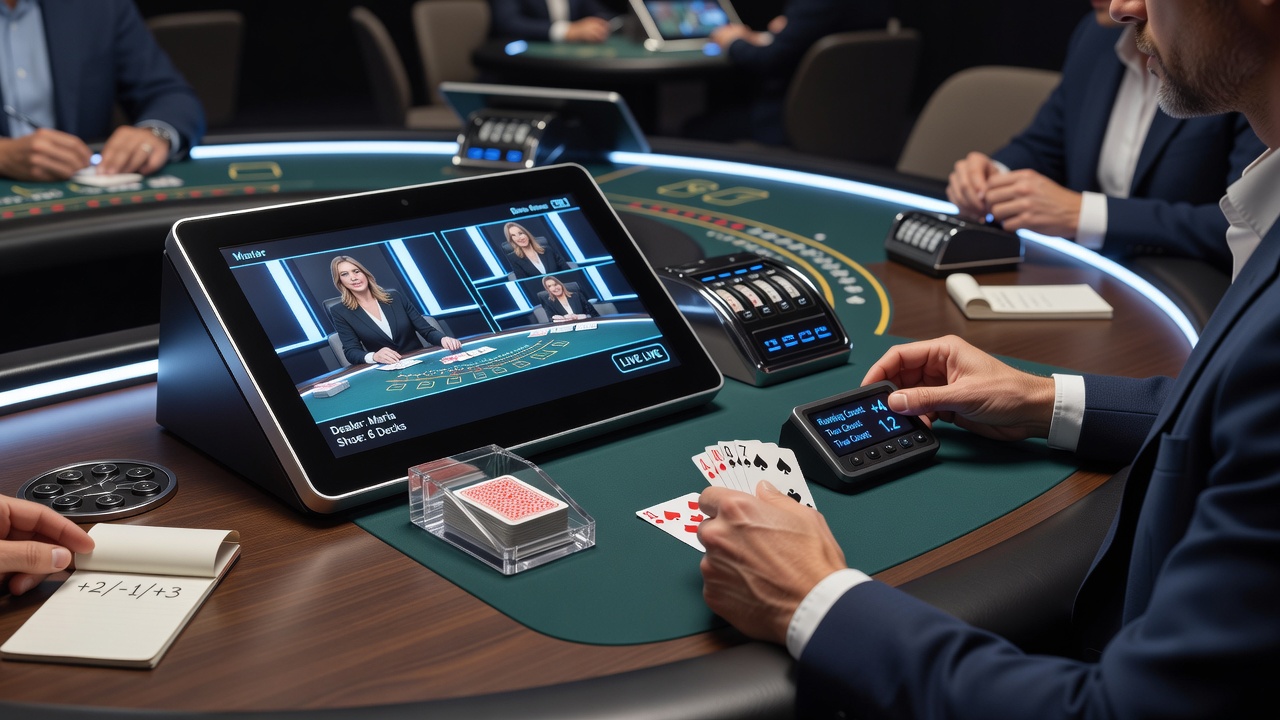
Live dealer technology transmits footage from physical tables located in controlled studios, while optical character recognition software identifies each card dealt and relays composition data to central servers. Players place bets through digital interfaces that record every action, and tournament software layers additional tracking that calculates running counts automatically for compliance officers. Data from multiple jurisdictions show that these automated logs reduce the time needed to review sessions from hours to minutes, allowing regulators to verify whether participants have altered strategies mid-event.
Traditional Counting Techniques Adapted to Digital Streams
Card counters have long tracked the ratio of high to low cards remaining in the deck, and in live dealer environments the same principles apply because the physical cards remain visible on camera. Observers note that players convert video feeds into mental tallies by noting ten-value cards and aces as they appear, then adjust bets when the count favors the player side. Studies conducted at university research centers indicate that accuracy rates for mental counting remain comparable between in-person and streamed tables, provided the video resolution stays above standard broadcast thresholds and latency stays below two seconds.
Yet tournament rules often impose additional constraints such as time limits per decision and mandatory minimum bets that compress the windows during which a favorable count can be exploited. Software algorithms now flag rapid bet increases that align with positive counts, prompting floor supervisors to intervene when patterns exceed predefined deviation thresholds. Figures released by the Nevada Gaming Control Board reveal that such interventions have increased by 18 percent in events held during the first half of 2026.
Regulatory Developments Expected in July 2026
Regulatory updates scheduled for July 2026 will require live dealer operators to maintain audit trails of deck composition data for a minimum of ninety days after each tournament concludes. These requirements stem from consultations between gaming commissions across North America and Europe, and they aim to standardize how operators share information with oversight bodies when suspicious activity appears. Industry reports compiled by the American Gaming Association show that similar record-keeping mandates in earlier years correlated with a measurable decline in successful advantage play at regulated sites.
Strategic Adjustments by Tournament Participants
Players who previously relied on physical tells now incorporate software overlays that display running counts derived from the same optical recognition feeds used by regulators. One documented case involved a team that synchronized separate observers monitoring different tables through shared digital dashboards, allowing collective updates to the overall count across multiple simultaneous streams. Such coordination remains legal in most jurisdictions provided no direct communication occurs during active play, though several tournament circuits have introduced rules that prohibit external devices capable of displaying automated tallies.
Research papers published in the Journal of Gambling Studies have examined how multi-hand configurations in live dealer tournaments alter the expected value of counting systems, because players must divide attention across simultaneous decisions while the count evolves after each hand resolves. Data collected from platforms operating under Malta Gaming Authority licenses indicate that error rates in mental tracking rise when participants manage four or more concurrent hands, prompting some competitors to limit their active positions even when the count remains favorable.
Future Intersections and Data Sharing Protocols
Emerging protocols allow operators to share anonymized count histories with academic researchers, creating datasets that track how deck composition shifts correlate with payout distributions across large numbers of tournament rounds. These datasets, when cross-referenced with regional shuffling schedules, help identify whether certain live dealer configurations systematically favor or hinder traditional counting edges. Observers note that the resulting models may inform future rule adjustments without requiring operators to disclose proprietary surveillance methods.
Conclusion
The convergence of live dealer streaming technology and established card counting methods continues to evolve as tournament organizers refine detection tools and regulators finalize new compliance standards ahead of the July 2026 updates. Players adapt by refining mental tracking techniques to account for video latency and automated logging, while oversight bodies expand data retention requirements to maintain integrity across multiple jurisdictions. Continued examination of these intersections will depend on transparent data sharing between operators, researchers, and gaming authorities operating under frameworks established by bodies such as the Nevada Gaming Control Board and the Malta Gaming Authority.