17 May 2026
Tracing How Deck Composition Shifts Altered Expected Returns Across Regional Casino Formats
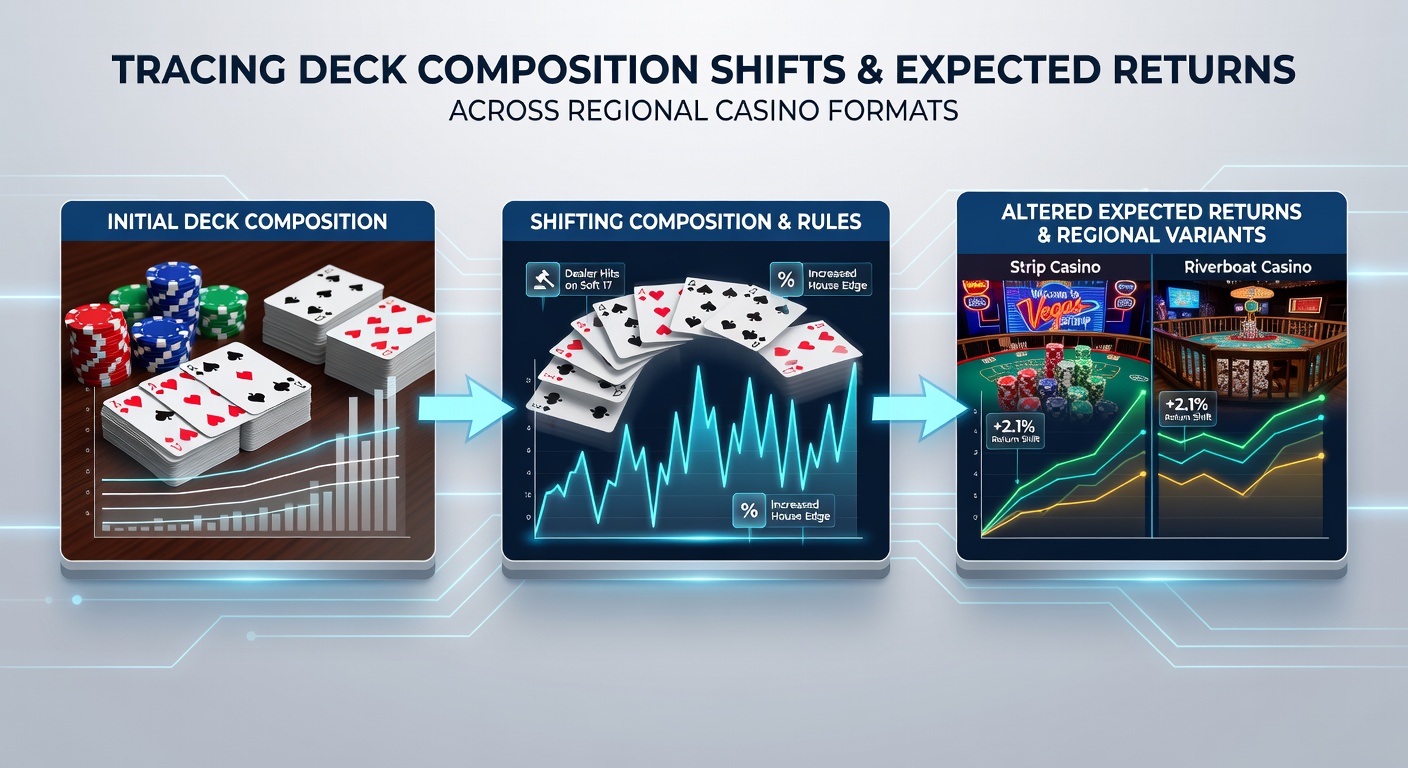
Deck composition refers to the number of cards in play, the frequency of shuffles, and the specific rules governing when new decks enter a game, and these elements have produced measurable changes in expected returns for players across casino markets. Data from regulatory filings and academic probability studies indicate that shifts from single-deck to multi-deck formats or from hand-shuffled tables to continuous shuffling machines alter the house edge by fractions of a percent that accumulate over large sample sizes.
Core Mechanics of Deck Composition in Blackjack
Researchers at institutions tracking gaming mathematics have documented how the removal of cards during play affects remaining probabilities, particularly when fewer decks remain in the shoe or when penetration rates allow deeper access before reshuffling occurs. Studies show that a six-deck shoe with 75 percent penetration typically yields a lower player advantage than a two-deck game dealt to the same depth, because the composition shifts more slowly and extreme card counts become rarer. Observers note that continuous shuffling machines eliminate natural depletion effects entirely, returning cards to the random pool after each round and thereby stabilizing expected returns closer to the theoretical house edge calculated for infinite decks.
Regional Differences in Format Adoption
Casino operators in North America adopted multi-deck shoes earlier and more widely than their counterparts in parts of Europe, where single-deck or double-deck games persisted longer in certain jurisdictions. Figures from the Nevada Gaming Control Board reveal that by the mid-2000s most Las Vegas Strip properties had moved to six- or eight-deck configurations with automatic shufflers, producing a baseline house edge around 0.5 percent under standard rules before any card-counting adjustments. In contrast, data compiled by Australian gaming authorities show that many venues retained manual shuffling of four-deck shoes into the 2010s, allowing greater sensitivity to composition changes and slightly improved expected returns for skilled players who tracked high and low cards through the shoe.
Asian markets introduced additional variables through the use of eight-deck shoes combined with frequent reshuffles at designated intervals. Industry reports from the Macau region document how these practices reduced the window for composition-based strategies while maintaining high table minimums that limited overall player volume. Canadian provincial gaming commissions have tracked similar transitions in Ontario and British Columbia casinos, where the introduction of continuous shuffling devices in the late 2000s correlated with a documented narrowing of variance in daily hold percentages.
Quantifying Shifts in Expected Returns
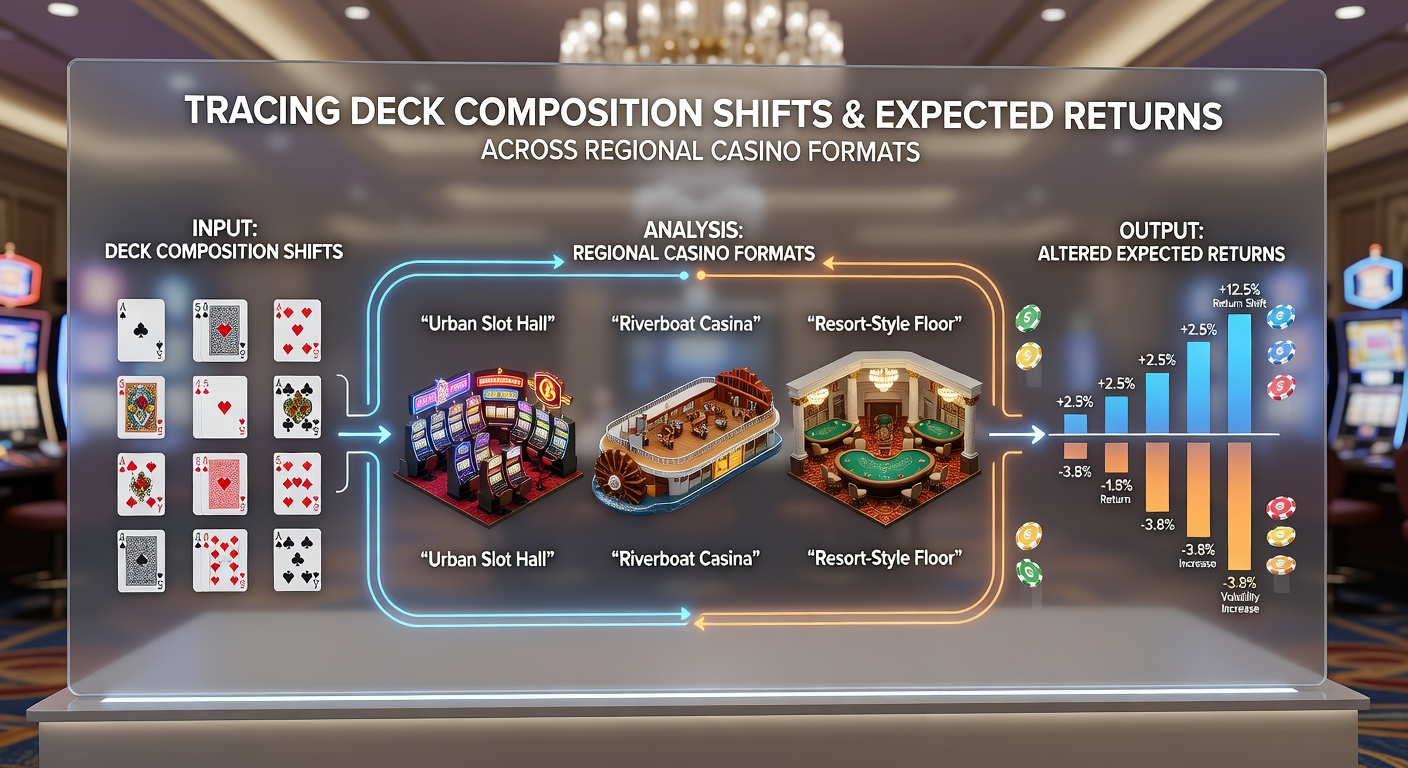
Probability models developed by academic teams demonstrate that moving from a four-deck shoe dealt to 50 percent penetration to an eight-deck shoe dealt to 65 percent penetration can increase the house edge by approximately 0.2 to 0.4 percent depending on the exact ruleset. These calculations incorporate the effects of dealer stands on soft 17, double-after-split permissions, and surrender options, each of which interacts with deck depletion rates. When casinos reduce penetration or install continuous shufflers, the models show the player’s long-run expected return declines because favorable card clumps occur less frequently and last for shorter durations.
Longitudinal data collected by researchers comparing pre- and post-implementation periods indicate that properties switching to continuous shuffling machines experienced a measurable drop in player win rates among those employing composition-tracking methods. The change appears most pronounced in games that previously allowed deep penetration, where the removal of high cards late in the shoe could temporarily shift the advantage to the player.
Developments Anticipated for May 2026
Regulatory updates scheduled to take effect in May 2026 in several U.S. states will require additional reporting on shuffling procedures and penetration limits at licensed cardrooms and casinos. These measures aim to standardize disclosure of deck composition parameters, enabling more precise tracking of how format choices influence hold percentages across different markets. Gaming associations in multiple jurisdictions have begun compiling baseline data ahead of the deadline, which will facilitate future comparisons of expected returns before and after the new compliance framework begins.
Operators in some regions have already announced pilot programs that test hybrid shuffling systems combining periodic manual checks with automated randomization. Preliminary internal reports suggest these systems maintain stable expected returns while addressing regulatory concerns about transparency. Observers following the preparations note that the May 2026 changes may encourage wider adoption of eight-deck formats with controlled penetration, further standardizing the mathematical environment players encounter.
Comparative Impact Across Markets
European venues that retained manual double-deck games into recent years have shown higher sensitivity to composition shifts than markets dominated by continuous shufflers. A research paper published by a team at the University of Sydney examined historical data from multiple continents and found that jurisdictions preserving deeper manual penetration recorded greater fluctuations in player returns during periods of elevated high-card density. These findings align with observations from Singapore’s regulatory filings, which track how eight-deck shoes with mid-shoe insertion points limit the duration of favorable compositions compared with older manual procedures.
Analyses of daily revenue reports across these regions confirm that format decisions produce consistent directional effects on expected returns, even when absolute differences remain small. Properties that increased the number of decks or reduced penetration observed corresponding adjustments in theoretical win rates, independent of player skill levels.
Conclusion
Deck composition adjustments have produced verifiable changes in expected returns wherever casinos operate under different regional rules and equipment standards. Documentation from gaming authorities and academic studies demonstrates that transitions to more decks, continuous shuffling, or shallower penetration reliably narrow opportunities created by natural card depletion. As new reporting requirements take effect in May 2026, additional data will become available to refine these comparisons across an even broader set of markets. The patterns identified so far rest on probability models and operational records rather than isolated anecdotes, providing a stable foundation for understanding how future format decisions will continue to shape player outcomes.